

Tyre Repair Puncture Repair and Workshop Operations SWMS
This SWMS covers tyre repair, puncture repair and workshop operations from setup and tyre assessment through removal, repair, inflation, refitting, disposal and clean-up.
Activities covered include
- Set up the workshop and inspect plant and equipment
- Apply puncture repairs and manage repair chemicals
- Dispose of tyres and workshop waste, then clean up
Download immediately
Your editable Word and PDF files are ready to download after purchase.
Acceptance guaranteed
If your client or principal requests changes during document review, BlueSafe will help revise the document at no extra cost and support resubmission until it is accepted.
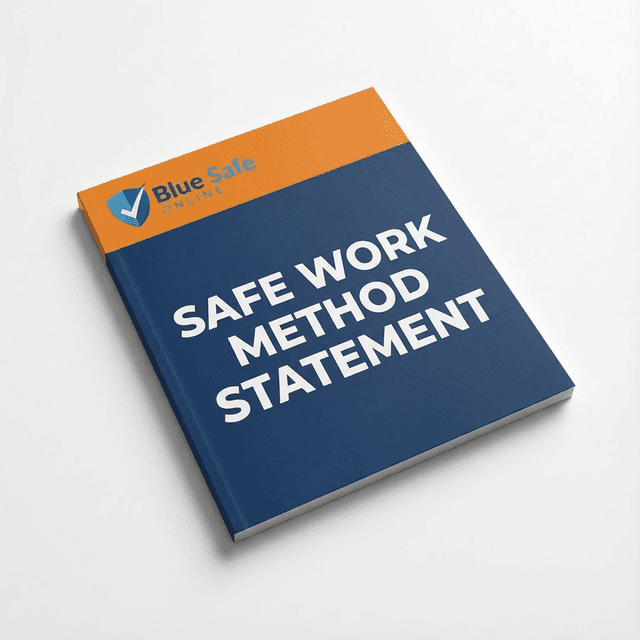
- 100% Compliant with Australian WHS Acts & Regulations
- Fully Editable MS Word & PDF Formats Included
- Pre-filled Content - Ready to Deploy Immediately
- Customisable - Easily Add Your Logo & Site Details
- Includes 2 Years of Free Compliance Updates
Product Overview
This SWMS covers tyre repair, puncture repair and workshop operations from setup and tyre assessment through removal, repair, inflation, refitting, disposal and clean-up. It supports planning for stored pressure, vehicle and wheel movement, workshop equipment, manual handling, chemicals and dust risks.
Activities & Specific Tasks Covered
This document includes task-specific risk controls for:
- Set up the workshop and inspect plant and equipment
- Receive, assess, deflate and handle tyres
- Remove wheels from vehicles and store tyres safely
- Break tyre beads and operate tyre-changing equipment
- Cut tyre beads and prepare puncture areas
- Apply puncture repairs and manage repair chemicals
- Use the tyre curing press
- Mount tyres, seat beads and inflate tyres
- Inspect tyres, refit wheels and balance wheel assemblies
- Dispose of tyres and workshop waste, then clean up
Who is this for?
For contractors, workers, supervisors and businesses carrying out tyre repair, puncture repair and workshop operations.
Specific Job Steps & Hazards Covered
| Job Step / Activity | Potential Hazards |
|---|---|
| Workshop setup and induction |
|
| Inspect plant and equipment |
|
| Receive and assess tyres |
|
| Deflate tyre safely |
|
| Remove wheel from vehicle |
|
| Handle and store tyres |
|
| Break tyre bead |
|
| Operate tyre changer |
|
| Cut tyre beads |
|
| Locate and prepare puncture |
|
| Apply puncture repair |
|
| Use tyre curing press |
|
| Mount tyre and seat beads |
|
| Inflate and inspect tyre |
|
| Refit wheel and balance |
|
| Dispose tyres and clean up |
|
Need to add specific site requirements?
Use the BlueSafe Portal to tailor this SWMS with site-specific details, job steps, hazards, controls and responsibilities before work starts.
Acceptance Guaranteed: If your client or principal requests changes during document review, BlueSafe will help revise the document at no extra cost and support resubmission until it is accepted.
Legislation & References
The template includes references relevant to the documented work, including:
- Work Health and Safety Act 2011 (or applicable state/territory equivalent): primary duty of care, consultation and worker duties.
- Work Health and Safety Regulations 2011 (or applicable state/territory equivalent): Part 3.1 risk management; Part 3.2 hazardous manual tasks; Part 3.5 plant and structures; Part 4.1 hazardous chemicals; Part 4.3 noise; Part 4.4 hazardous atmospheres; Part 7.1 hazardous work.
- Safe Work Australia, Code of Practice: How to manage work health and safety risks, November 2024.
- Safe Work Australia, Code of Practice: Managing the risks of plant in the workplace, November 2024, including energy isolation and lock-out requirements.
- Safe Work Australia, Code of Practice: Hazardous manual tasks, March 2020.
- Safe Work Australia, Code of Practice: Managing risks of hazardous chemicals in the workplace, including ventilation, SDS, labelling, substitution and housekeeping controls.
- Applicable manufacturer operating manuals, maintenance schedules and safety instructions for the tyre changer, inflator, curing press, tyre buffer, vehicle hoist and wheel balancer.
Standard SWMS Features (Click to Expand)
- Task-specific job steps, hazards and control measures
- Initial and residual risk ratings
- Assigned responsible persons for each job step
- Plant, equipment and PPE requirements where applicable
- Permits, qualifications and high-risk construction work details where applicable
- Worker consultation, sign-off and review sections
Suitable for Industries
Related templates
$79.50
$96.80
Includes all formats + 2 years updates
Acceptance guaranteed
If your client or principal requests changes during document review, BlueSafe will help revise the document at no extra cost and support resubmission until it is accepted.
$79.50
$96.80
One-time payment